English


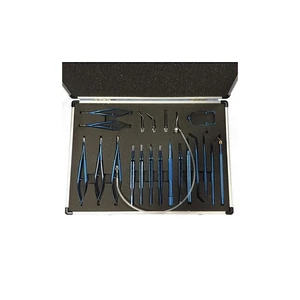
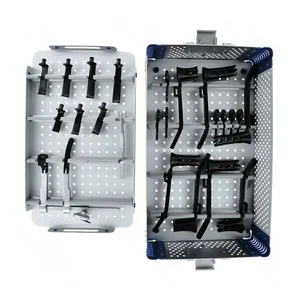
Basic Eye Surgery Instrument Set
SV-SET-OPH-24-01
Search across surgical specialties, instrument families and product codes.
Single-use circumcision procedure packs should be evaluated as coordinated clinical and procurement systems, not as generic bundles of disposable instruments. Clinical teams need a configuration that supports the intended procedure, while purchasing teams need clear evidence about packaging, traceability, supplier controls and quoted costs.
A disciplined sourcing process starts by defining the pack, then reviewing the instruments and documentation before comparing commercial offers. This approach helps hospitals distinguish meaningful differences in pack configuration from differences that only reflect terminology, presentation or incomplete quotations.
Begin with the procedure-specific contents rather than accepting a standard list without review. The proposed pack should identify each instrument by functional description, quantity and, where relevant, size or pattern. Include the items required to establish and maintain the sterile field, together with any consumables that the clinical team expects to receive in the same configuration. The final specification should be approved by the relevant clinical and procurement stakeholders before supplier quotations are compared.
| Specification area | Buyer should define | Why it matters |
|---|---|---|
| Instrument contents | Names, quantities and functional descriptions | Prevents incomplete or non-comparable pack quotations |
| Pack presentation | One pack, subpacks or separate sterile units | Affects opening workflow and waste review |
| Identification | Product codes, lot details and traceability fields | Supports receiving checks and stock control |
| Clinical review | Approved configuration and permitted substitutions | Reduces unplanned variation between orders |
Instrument geometry deserves a separate clinical review because a familiar name does not fully describe how an instrument handles. For forceps and clamps, examine the jaw profile, serration pattern, tip shape, closing action and visibility in the proposed use. The relevant question is whether the pattern is appropriate for the team’s established technique and tissue-handling requirements, rather than whether a catalogue description uses the word atraumatic.
Box-lock instruments should also be checked at the articulation. Review how the jaws align when closed, whether the joint moves smoothly through its working range and whether the design allows the user to control the instrument as intended. These observations should be documented through approved samples, drawings or other supplier-controlled technical information. Avoid treating a box-lock label alone as evidence of suitability.
| Review point | Questions for the clinical team | Evidence to request |
|---|---|---|
| Jaw profile | Does the shape match the intended handling requirement? | Clear product description, drawing or sample |
| Closure | Do the jaws meet and align consistently? | Representative sample and inspection method |
| Box-lock articulation | Is movement controlled and free from unexpected interference? | Technical description and sample review |
| Substitution control | What changes would require reapproval? | Written equivalence and change-notification process |
Material claims should be specific enough to evaluate and document. If a supplier describes an instrument as AISI surgical steel, ask which material designation applies to the relevant component and request the supporting technical documentation. A general reference to surgical steel is not a complete material specification. The buyer should also distinguish between the base material, surface treatment and the finished instrument supplied in the pack.
Passivation claims require the same care. Ask what the supplier means by passivation, which instruments or components it covers and how the process is controlled or verified. The procurement file should retain the supplier’s current documentation, product identification, revision status and any quality information required by the hospital’s approval process. A quality-management certificate or standards reference may support supplier assessment, but it should not replace product-specific review.
| Documentation topic | What to verify | Procurement record |
|---|---|---|
| Material | Named designation and covered components | Current technical specification |
| Passivation | Scope, process description and control evidence | Supplier statement or controlled document |
| Traceability | Lot, batch or product identification available at receipt | Sample label and receiving procedure |
| Quality system | Relevant supplier quality documentation and validity | Approved supplier file |
Sterile field integrity depends on more than the word sterile in a quotation. The hospital should define the packaging presentation expected at delivery and establish a receiving inspection that checks the outer pack, seals, labels and visible condition. Staff should know how to identify damage, opened seals, unclear labelling or discrepancies between the received contents and the approved configuration. Any concern should follow the organisation’s established quarantine and escalation process.
Storage requirements should be agreed before ordering. Consider the space needed for outer cartons, pack rotation, stock identification and separation of approved stock from material under review. The receiving process should connect the pack’s identification to the purchase order and inventory record. This creates a practical control for expiry information where applicable, lot tracking, replenishment and investigation of nonconforming deliveries.
Bulk purchasing can be attractive when demand is predictable and the hospital can store and use the packs within its operational controls. The lowest quoted unit price is not sufficient for a fair comparison. Review the complete delivered cost, including pack contents, freight, minimum order quantities, storage impact, inspection effort, rejected deliveries and the cost of unused or unsuitable components. A transparent model makes it easier to compare a configured pack with a lower-priced bundle that requires additional purchases.
Use one standard RFQ for every invited supplier. Require a line-by-line response so that differences in quantities, substitutes, packaging and commercial assumptions are visible. Ask suppliers to identify lead times, quotation validity, minimum order requirements, documentation supplied with the order and the process for approving changes. The final decision should balance clinical acceptance, documentation quality, supply reliability and total cost rather than price alone.
| Cost element | Comparison question | Reason to include |
|---|---|---|
| Pack price | Are contents and quantities identical? | Prevents misleading unit-price comparisons |
| Freight and delivery | What is included in the quoted price? | Clarifies delivered cost |
| Minimum order | How much stock must be committed? | Shows cash and storage implications |
| Quality review | What inspection or approval effort is required? | Recognises operational workload |
| Waste and unused items | Will all included components be used? | Highlights configuration efficiency |
Before award, bring the clinical, infection-prevention, supply-chain and procurement reviews together. Confirm that the proposed configuration is understood, the instruments have passed the agreed review, and the supplier has answered documentation questions without relying on broad marketing language. The approval record should identify the exact pack version, approved substitutions, packaging presentation, receiving checks and escalation route.
A structured checklist also makes future reordering safer. If the supplier changes a component, material designation, packaging format or manufacturing location, the hospital can determine whether a new review is needed. This protects continuity without assuming that a product described as equivalent is automatically interchangeable.
The strongest single-use circumcision procedure pack decisions connect clinical suitability with purchasing discipline. Define the contents clearly, review jaw patterns and box-lock articulation with the clinical team, and request specific documentation for steel, passivation, traceability and packaging. Then compare quotations using the same assumptions and a total-cost view.
A well-constructed RFQ gives hospitals a defensible basis for supplier qualification and bulk ordering. Before committing to volume, approve a representative configuration, confirm receiving controls and document how changes will be handled. This keeps the pack aligned with clinical expectations while making its commercial value easier to assess.
The contents should be based on the hospital’s approved procedure workflow rather than a generic catalogue bundle. Define each instrument and consumable by description, quantity and relevant pattern or size. Separate essential items from optional additions, state the intended pack presentation and identify any substitutions that would require clinical approval.
Create a receiving check for pack identity, label clarity, seal condition and visible packaging damage. Staff should reconcile the delivered configuration with the purchase order and know how to quarantine and escalate discrepant, opened, damaged or mislabelled packs. Storage and stock-rotation controls should be documented alongside the receiving process.
Review the jaw profile, tip shape, serration pattern, alignment and closing action against the clinical team’s accepted handling requirements. The term atraumatic should not be treated as a complete technical specification. Representative samples, controlled drawings or detailed supplier documentation can help the team assess whether the proposed pattern is suitable.
Use one RFQ and require line-by-line responses showing contents, quantities, substitutions, minimum orders, delivery assumptions and documentation. Compare delivered cost alongside storage, inspection, rejected deliveries and unused components. Score clinical fit, supplier controls, documentation and economics separately so that a low unit price does not conceal an unsuitable configuration.
Nov 14, 2026 by Usman Rafiq
Oct 04, 2026 by Dr. Tariq Mahmood