English


Boley Gauge & Surgical Calipers: Clinic Precision, Calibration & Care Guide
Learn how outpatient and dental-surgical clinics verify Boley gauge vernier accuracy, regulatory compliance, and 134°C benchtop autoclave durability.
Reviewed for private surgical clinics, aesthetic centers, and outpatient practitioners across the USA, EU, UK, and international markets.
On this page (8)
- Understanding Boley Retractor Geometry and Blade Depth Standards
- Regulatory Compliance: Navigating CE, UKCA, and ISO 13485 Documentation
- Precision Measurement: The Importance of Laser-Etched Metric Verniers
- Durability Analysis: Autoclave Longevity at 134°C for Stainless Steel
- Procurement Checklist: Verifying Technical Specifications in RFQs
- Strategic Sourcing for Reliable Surgical Instruments
- Frequently asked questions
- Related Outpatient Categories & Clinic Sourcing
Selecting the correct Boley retractor requires more than identifying the instrument type; clinical teams must verify precise geometric specifications and regulatory compliance. This guide addresses the technical nuances of blade depth standards and gauge calibration essential for safe surgical use in UK healthcare settings.
Procurement officers face the challenge of balancing material durability with strict documentation requirements. Understanding how laser-etched verniers withstand repeated sterilisation cycles is critical for long-term asset management and patient safety within outpatient surgical centers.
Understanding Boley Retractor Geometry and Blade Depth Standards
The Boley retractor is a specialized handheld instrument designed primarily for abdominal surgery, featuring a distinct right-angle configuration that allows for deep tissue retraction without obstructing the surgeon's view. Standard blade depths vary to accommodate different patient anatomies and surgical approaches, typically ranging from shallow incisions to deeper pelvic exposures. Accurate measurement of these dimensions is vital because even minor deviations can affect tissue handling and exposure quality during procedures.
When evaluating technical data sheets, clinicians should look for explicit millimetre measurements for both the short and long blades. These figures define the instrument's reach and leverage capabilities. A clear understanding of these geometric parameters ensures that the selected retractor matches the specific procedural requirements, reducing intraoperative adjustments and potential fatigue for the operating team.
- Verify blade length in millimetres against standard surgical protocols.
- Check the angle of the shaft relative to the handle for ergonomic fit.
- Confirm tip design suitability for delicate versus robust tissue types.
Regulatory Compliance: Navigating CE, UKCA, and ISO 13485 Documentation
In the post-Brexit landscape, ensuring that surgical instruments carry valid UKCA or CE markings is a fundamental compliance step for UK healthcare providers. The UKCA mark indicates conformity with British regulations, while the CE mark remains recognized under specific transitional arrangements and EU alignment. Procurement teams must request certificates of conformity that explicitly reference the applicable medical device directives or regulations.
Documentation should include the notified body identification number where required, as this validates third-party assessment of the instrument's safety and performance. Relying solely on supplier claims without verifying physical markings and accompanying paperwork exposes institutions to regulatory risks. Proper due diligence confirms that the Boley retractor meets the stringent quality management systems mandated for medical devices sold in the United Kingdom.
- Inspect physical markings on the instrument handle for clarity and permanence.
- Request copies of Declaration of Conformity documents from suppliers.
- Verify notified body numbers against official government registers.
Precision Measurement: The Importance of Laser-Etched Metric Verniers
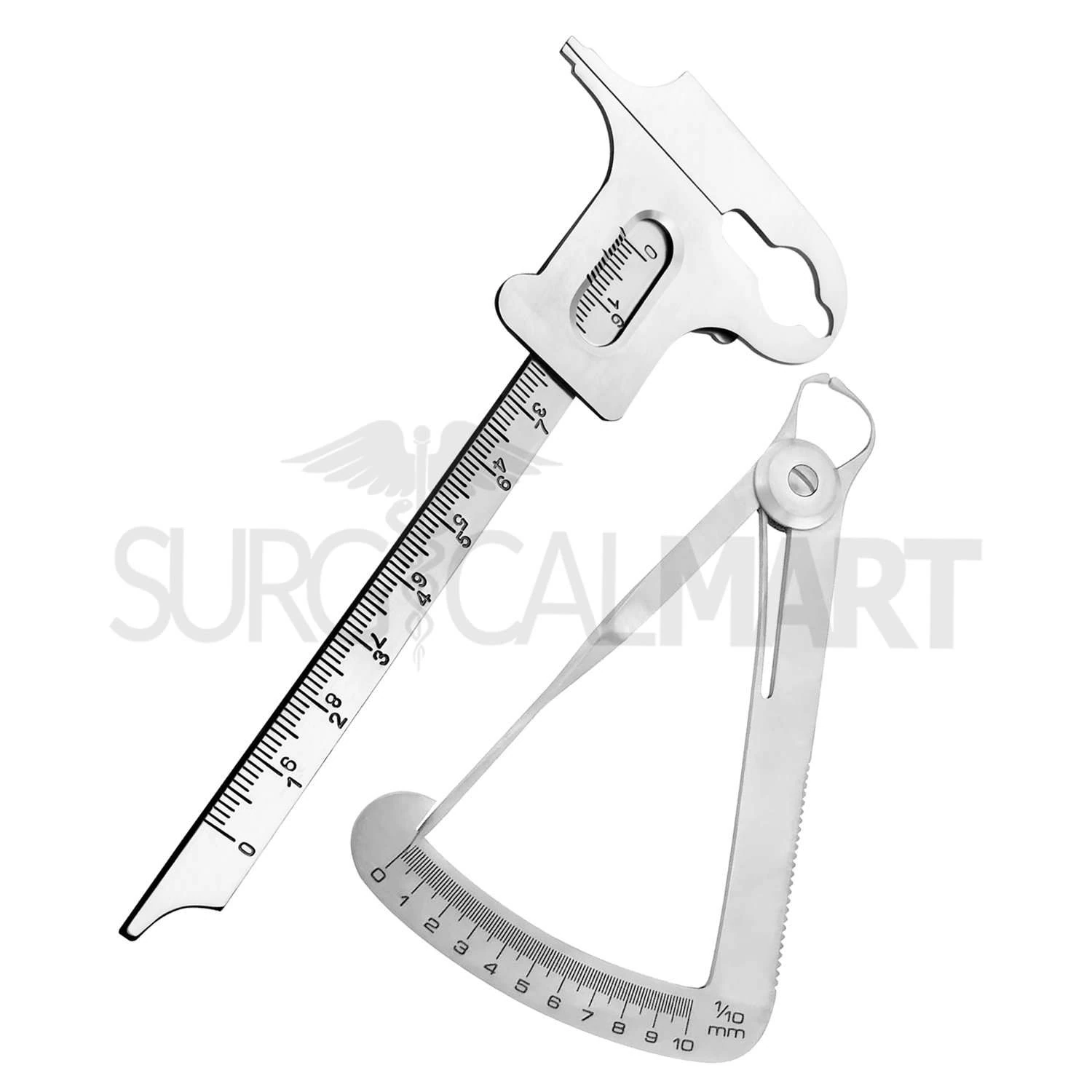
Many Boley gauges incorporate vernier scales to assist in measuring tissue thickness or suture spacing during procedures. The method of applying these scales significantly impacts their longevity and readability. Laser etching creates permanent marks directly into the stainless steel surface, whereas printed or pad-stamped scales are prone to fading or peeling after repeated cleaning and sterilisation cycles.
For clinical teams, the preference for laser-etched metric verniers lies in their resistance to chemical degradation and mechanical abrasion. This ensures that measurement accuracy remains consistent throughout the instrument's lifecycle. When specifying procurement requirements, insisting on laser-etched calibration prevents the need for frequent replacements due to illegible scales, thereby maintaining operational efficiency and cost-effectiveness over time.
- Laser etching provides superior contrast against polished stainless steel.
- Permanent markings survive harsh enzymatic cleaners and high heat.
- Reduced risk of misreading faded scales during critical steps.
Durability Analysis: Autoclave Longevity at 134°C for Stainless Steel
Surgical instruments undergo rigorous sterilisation processes, typically involving steam autoclaving at temperatures up to 134°C. High-grade stainless steel alloys used in reputable Boley retractors are engineered to withstand these thermal stresses without warping, corroding, or losing structural integrity. However, not all materials perform equally under repeated cycles, making material specification a key factor in procurement decisions.
Assessing autoclave longevity involves reviewing the manufacturer's validation data regarding cycle counts before significant degradation occurs. Instruments that maintain their edge geometry and surface finish after hundreds of cycles offer better value and reliability. Procurement officers should prioritize suppliers who provide evidence of such durability testing, ensuring that the assets remain functional and safe for extended periods within busy hospital environments.
- Confirm alloy grade compatibility with standard hospital sterilisation protocols.
- Review warranty terms related to corrosion or deformation after cycling.
- Consider total cost of ownership based on expected service life.
Procurement Checklist: Verifying Technical Specifications in RFQs
To streamline the acquisition process, procurement teams should integrate specific technical verification points into Request for Quotation (RFQ) templates. This approach shifts the burden of proof onto the supplier, ensuring that only compliant and durable products are considered. Clear criteria reduce ambiguity and prevent the acceptance of substandard instruments that may fail regulatory audits or clinical expectations.
A structured checklist helps standardize evaluations across different vendors. By mandating detailed responses on blade dimensions, marking compliance, scale application methods, and sterilisation resilience, hospitals can make informed comparisons. This systematic approach supports strategic sourcing goals, aligning instrument selection with broader clinical governance and financial planning objectives within the healthcare institution.
- Require exact millimetre tolerances for all blade components.
- Mandate submission of current UKCA/CE certification documents.
- Specify laser-etched scales as a minimum quality standard.
- Ask for validated autoclave cycle endurance data.
| Specification Area | Required Documentation | Verification Method |
|---|---|---|
| Blade Dimensions | Technical Data Sheet | Physical Measurement Check |
| Regulatory Status | Declaration of Conformity | Marking Inspection |
| Scale Durability | Material Certification | Visual Inspection Post-Sterilisation |
Strategic Sourcing for Reliable Surgical Instruments
Effective procurement of Boley retractors hinges on a thorough understanding of technical geometry, regulatory status, and material science. By prioritizing laser-etched verniers and verified autoclave resilience, clinical teams ensure long-term usability and safety. Adhering to strict UKCA and CE compliance frameworks protects institutional integrity and patient care standards.
Moving forward, integrate these technical checkpoints into your standard RFQ processes. Collaborate closely with biomedical engineering departments to validate supplier claims against actual instrument performance. This proactive approach minimizes risks associated with non-compliant or fragile equipment, supporting a robust and reliable surgical inventory.
Selected Retractor System Sets products
$58.00 $66.06
$16.99 $19.76
$16.99 $18.67
$42.00 $45.16
Frequently asked questions
Why is laser etching preferred over printing for Boley gauge scales?
Laser etching permanently alters the metal surface, creating marks that resist fading from chemicals and heat. Printed scales often peel or wear off after multiple sterilisation cycles, leading to inaccurate readings and premature instrument replacement. For clinical reliability, permanent markings are essential.
What regulatory markings apply for surgical instruments?
UKCA marking indicates that the product complies with relevant British regulations for medical devices. It serves as the primary conformity mark for goods placed on the market in Great Britain, replacing the CE mark for new products unless specific transitional provisions apply. Always verify the certificate validity.
How do I check if a retractor withstands 134°C autoclaving?
Review the manufacturer's technical documentation for validated sterilisation cycle limits. Look for statements confirming the stainless steel alloy's resistance to corrosion and deformation at high temperatures. Physical inspection after several cycles can also reveal early signs of stress, such as pitting or warping.
Are there standard blade depths for all Boley retractors?
No single standard applies universally; Boley retractors come in various sizes to suit different surgical needs. Common configurations include pairs of blades with differing lengths to allow versatile retraction. Always consult the specific technical data sheet for exact millimetre measurements before purchasing.
Related Outpatient Categories & Clinic Sourcing
Related Categories & Sourcing Hubs
Claire Hastings
Outpatient Clinic Procurement & Sample Evaluation Specialist
Reviewed for private surgical clinics, aesthetic centers, and outpatient practitioners across the USA, EU, UK, and international markets.