English


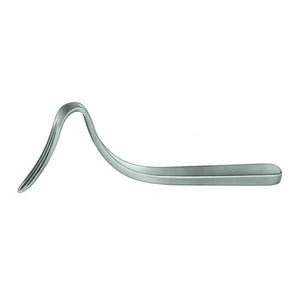
TAEGER Bone Lever
062020002
Search across surgical specialties, instrument families and product codes.
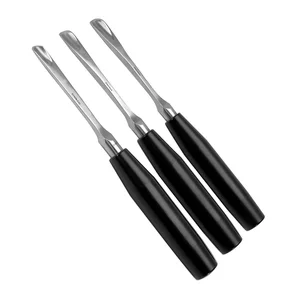
The Anterior Cobb Elevator is a variation of the classic Cobb elevator specifically designed for anterior surgical approaches to the spine (such as anterior cervical or anterior lumbar procedures). Cobb elevators are long, sturdy instruments with a broad, flat blade used to elevate periosteum and soft tissues off of bone. The anterior version often has slight modifications, like a certain curvature or angle, to facilitate working from an anterior direction (front of the spine) as opposed to the posterior. Surgeons performing anterior cervical discectomy and fusion (ACDF) or anterior lumbar interbody fusion (ALIF) frequently use Anterior Cobb Elevators to separate and mobilize structures like the esophagus, vessels, or organs, as well as to strip the anterior longitudinal ligament and periosteum off the vertebral bodies. These elevators are prized for their combination of strength and finesse, enabling a controlled tissue dissection in sensitive areas.
In anterior cervical spine surgery (such as ACDF), after initial exposure of the cervical spine, an Anterior Cobb Elevator can be used to release the anterior longitudinal ligament and remove the disc material. The surgeon slides the elevator along the anterior surface of the vertebral bodies to peel off the ligament and periosteum. This exposes the bony surface for drilling or fusion and can be done quickly with the broad elevator blade. The slight curve of the elevator is particularly useful in this region to accommodate the natural curvature of the neck and to protect nearby structures like the trachea or esophagus by hugging the bone surface.
For anterior lumbar surgeries (like ALIF), the Anterior Cobb Elevator helps in separating the great vessels (aorta and vena cava) and peritoneal contents away from the spine after the surgeon gains access to the front of the vertebral column. By carefully inserting the elevator and sliding it along the psoas muscle or vertebral body, the surgeon can mobilize these tissues. Additionally, the elevator is used to scrape off the anterior longitudinal ligament and annulus fibers from the vertebral bodies to prepare the surface for graft placement. The strength of the elevator is key here because lumbar structures are robust and sometimes calcified; the tool needs to handle tough tissue without flexing.
Surgeons and hospitals choose the Surgivalley Anterior Cobb Elevators for their superior build and tailored design. We ensure that the curvature of our anterior elevators is optimized for access yet does not compromise strength. Each elevator is finished with a non-slip handle and a finely machined blade edge (slightly dull by design to lift tissue without cutting it outright).
Maintenance is simple – they resist corrosion and are easy to identify in a surgical tray due to their distinctive shape. They pair well with other instruments from our [Elevators & Bone Levers] category, such as classic Cobb elevators and Hohmann retractors, to provide a full set of options for tissue management. With Surgivalley’s Anterior Cobb Elevators, spine surgeons are equipped to perform anterior exposures safely and efficiently, ensuring vital structures are protected and the surgical goal is achieved with minimal complications.
RELATED CATALOGUE
Compare currently published product records, patterns and available specifications in the relevant category.
Use the product pages and quote list to prepare an itemized requirement for review.